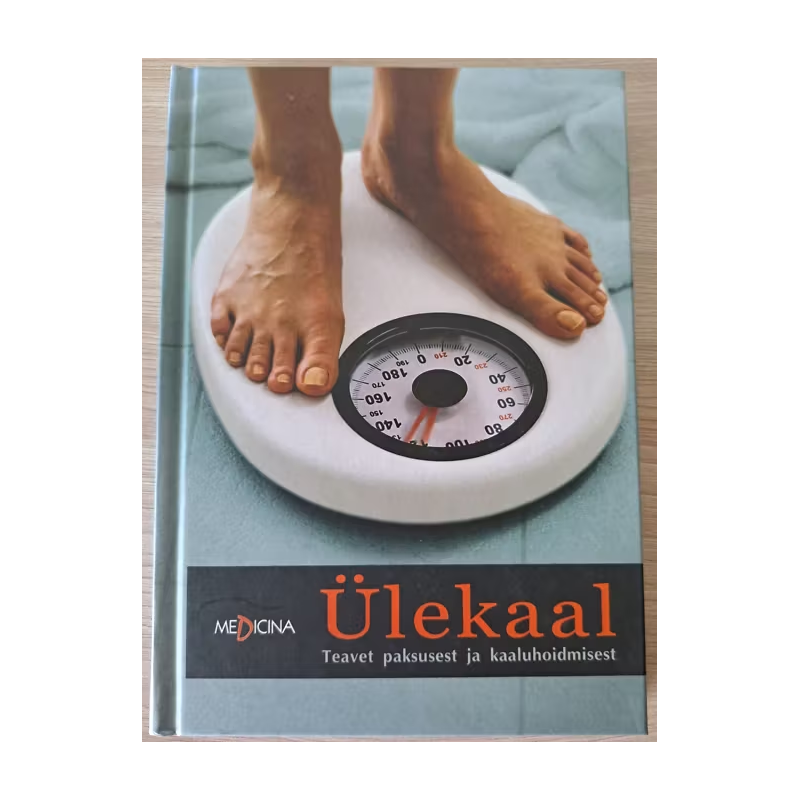

Excess Weight: Information on Obesity and Weight Maintenance
Author: Pertti Mustajoki
Translator: Viivi Variksaar
Cover Designer: Igor Balashov
Pages: 248
Year of Publication: 2008
Publisher: Medicina
Language: Estonian
Condition: Used book in good condition
– Is swapping a sugary cola for a calorie-free drink a way to lose weight?
– Do snacks help with weight maintenance?
– Why do I keep gaining weight even though I eat like a bird?
– Do people eat more when using a large plate?
– What do studies say about the effectiveness of weight-loss products?
Obesity and weight maintenance are concerns for many. There are numerous misconceptions about this topic that lack scientific evidence yet continue to spread. This book aims to dispel many of these myths.
*Overweight – Information on Obesity and Weight Maintenance* provides clear, up-to-date answers to questions surrounding obesity. The book is written by a leading specialist in the field, internist and professor Pertti Mustajoki.
It serves as a valuable resource for both the general public and healthcare professionals.
Table of Contents:
What causes excess weight?
The "weight train" has left the station
Reduced energy needs
The impact of education and life circumstances on weight gain
Smoking and body weight
The impact of pregnancy on body weight
The impact of sleep on weight
Is excess weight hereditary?
Why do people become overweight?
Food and body weight
Energy intake
How do different nutrients affect body weight? Nutrient absorption is difficult to determine
"Eating like a bird"
Appetite and satiety
Foods vary in their satiating effect
Satiety depends on the amount of food
Energy content of food
Energy content and energy intake
Water and satiety
Sugary drinks
Large portions lead to increased food intake
Taste influences appetite
Environmental and cultural influences on eating
Physical activity and appetite
The body regulates itself
Summary of appetite regulation
Energy expenditure and physical activity
Resting energy expenditure
The effect of food on energy expenditure
Energy expenditure during muscle activity
Incidental physical activity
Total energy expenditure
Baseline activity is the deciding factor
Physical activity and body weight
Age and energy expenditure
Weight loss reduces energy expenditure
Misconceptions about physical activity and weight maintenance
Other health effects of physical activity
Adipose tissue and assessing its thickness
Adipose tissue
Body Mass Index (BMI)
Assessing childhood obesity
Abdominal obesity
Measuring body fat percentage
Fat cell
Excess weight and health
Type 2 diabetes
High blood pressure
Metabolic syndrome
Other diseases
Obesity and mortality
Psychological issues associated with excess weight
Negative attitudes towards overweight people
Stigmatization of overweight people
Depression
Emotional eating
Food cravings
Carbohydrates and mood
The overweight person Binge eating disorder
Nighttime eating
Excess weight has become common
Finns are heavier than ever before
Weight increases with age
Weight issues in other countries
The basics of weight maintenance
How to evaluate weight-loss methods?
US Weight Control Registry
Diabetes prevention study
What is a healthy weight?
Regular weighing as a weight maintenance strategy
Continuous weight fluctuation
Weight loss and maintenance results
Alternatives to weight-loss diets
Diet menus
Healthy diet
Very-low-energy diet
Atkins diet
Other fad diets
Food, eating, and weight maintenance
Food quality
Drinking water
Energy content and weight maintenance
Fast food
Plant-based vs. mixed diet
Alcohol
Replacing meals with supplements
Number of meals and snacks
Eating speed
Portion and dish sizes
Summary: food, eating, and weight maintenance
Physical activity and weight maintenance
Physical activity helps prevent weight gain
How much weight is lost through physical activity alone?
Physical activity combined with dieting
Physical activity for maintaining weight loss
How much physical activity is needed after weight loss?
Continuous or intermittent physical activity?
Which type of physical activity to choose?
How many steps?
Summary: physical activity and weight maintenance
Changing habits
Principles of changing habits
What is the goal?
How to get eating under control? From procrastination to habit formation
Suppressing appetite
"Collapse" and relapse
Medical treatment for obesity
Orlistat (Xenical®)
Sibutramine (Reductil®)
Rimonabant (Acomplia®)
Efficacy of medications
Use of weight-loss products
Surgical treatment for obesity
Surgical methods
Surgical outcomes
Adverse effects of weight-loss surgeries
When does a patient choose surgery?
Liposuction
A tempting deception
What do studies show?
How to spot the deception?
Children and body weight
Changes in children's taste preferences
Restricting food intake
"Clean your plate"
Rewarding with food
How to approach children's eating habits?
Declining physical activity
Reducing sedentary pastimes
The importance of age in weight management for children
The role of parents
Principles of treating childhood obesity
Outcomes of treating childhood obesity
Preventing obesity
The "weight maintenance slump"
What can society do to prevent population-wide obesity?

Data sheet
Excess Weight: Information on Obesity and Weight Maintenance
Author: Pertti Mustajoki
Translator: Viivi Variksaar
Cover Designer: Igor Balashov
Pages: 248
Year of Publication: 2008
Publisher: Medicina
Language: Estonian
Condition: Used book in good condition