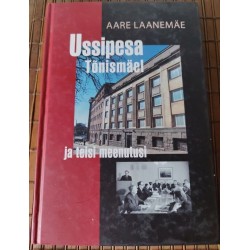
- Out-of-Stock


"The sea that washes our home shore has taught coastal people to love and respect themselves since ancient times. It invited, attracted, fed and covered the coastal people, but it also brought heartache and horror to some. The sea also taught coastal people to take risks. Every fisherman, leaving his home shore for the sea, fishing or some other trip, took risks. People quickly adapt to any situation, and it became natural and everyday for fishermen to put themselves and their traps at risk. Thus, the coastal people developed a trait that did not consider risk to be anything. It is impossible to imagine a coastal life without risk. Thus, these qualities were passed down from generation to generation. It can be assumed that since ancient times, the people of the northern coast had contact with the neighboring Finns, and there was certainly some kind of trade. ..»
This is how professional alcohol transporter Ludvig Anteplon, or Andikäspri Ludvi, a Viinistu man, who was born in 1909 on the Andikäspri farm, began his memoirs. Ludvig Anteplon, like many of his fellow travelers, sailed on various boats, large and small, changing owners and flags, and sometimes even serving a sentence. Years ago, I was visiting my good acquaintances, Kodurands, in the village of Viinistu. Viima Kodurand, the former principal of the Viinistu school, gave me his memoirs to read, which were three fairly thick rubber stamps. I sat down under an apple tree and read them through in one breath. I was left thinking . .. How tough those Estonian and Finnish sailors, fishermen, and coastal peasants were, who were not afraid of wind or storm, border guard artillery, or border guard aircraft. They often risked their lives for their service and daily bread, even though the great benefits sometimes went to someone else's pocket.
No wrapping paper.

Data sheet