- New
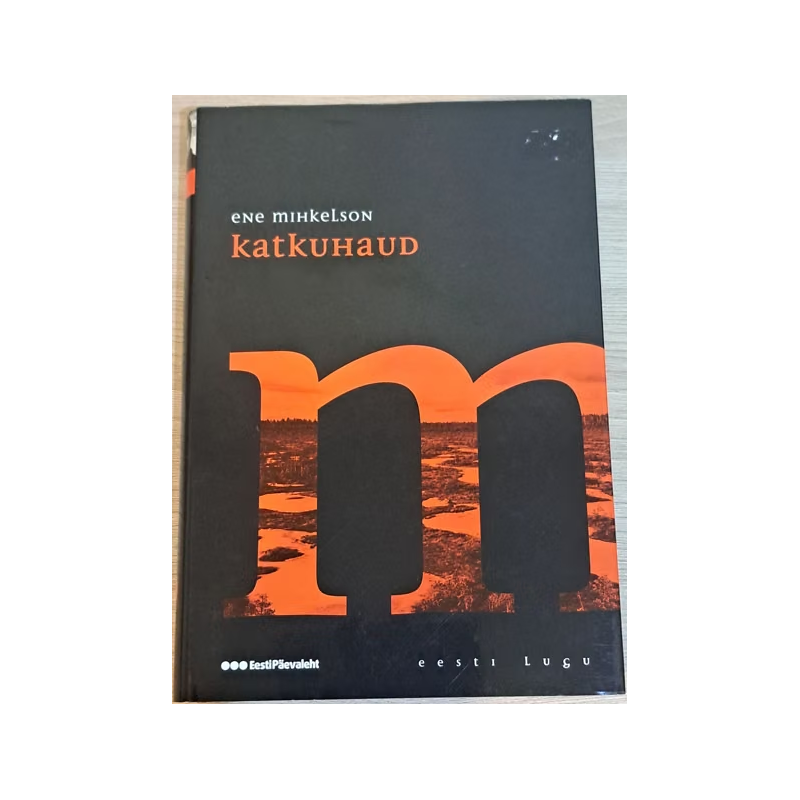

Plague Grave
Author: Ene Mihkelson
Designer: Jüri Jegorov
Pages: 304
Year of publication: 2009
Publisher: Estonian Daily
Series: Estonian Story (Part 38)
Language: Estonian
Condition: Used book in good condition.
Ene Mihkelson's highly acclaimed "The Plague Grave" (2007) focuses on the most difficult period in Estonian 20th-century history. These are painful retrospective stories that lead the reader through the most recent events - "The Plague Grave" begins at the so-called monument to the liberators of Tallinn - back to the post-World War II period, whose mysterious twists reach into the present day. The book, which looks back at the past, talks primarily about what actually happened in Estonia during and after the war, and how and why it was kept quiet for decades and is still being kept quiet today.
In the novel, the narrator, who lives in our time, sets out to investigate the story of the death of his father, a forest brother, with the help of relatives, acquaintances and archival materials. His childhood memories of the tragic event over fifty years ago are mostly general. The only thing certain is that his father Valter and mother Sanna began to hide as forest brothers for fear of deportation and that his father was killed in a raid by the security organs of the occupation power in 1953 before Stalin's death. His mother Sanna escaped and was "legalized" a few years later. While his parents were in the forest, the narrator's caretaker and educator was his mother's sister Kaata, who later placed the child in a boarding school. Thus, the narrator became estranged from his family and relatives. Now, decades later, he is trying to reconstruct and decipher the events of that time as accurately as possible for himself.
Critics have associated Mihkelson's prose with a type of novel common in the literature of the second half of the 20th century, the so-called memory novel, in which the characters are burdened by a certain burden of the past in the present. This is what sets the novel in motion and captures the reader. Mihkelson has used this technique so masterfully that after the level he has achieved, writing memory novels has come to be considered a much more difficult task in Estonia. Mihkelson's works have also been called the first great Estonian novels of the 21st century. In 2008, "Pandemic" received the Albu Rural Municipality AH Tammsaare Literary Prize and the Estonian Cultural Endowment's Literature Endowment Prize for the Best Prose Work.

Data sheet
Plague Grave
Author: Ene Mihkelson
Designer: Jüri Jegorov
Pages: 304
Year of publication: 2009
Publisher: Estonian Daily
Series: Estonian Story (Part 38)
Language: Estonian
Condition: Used book in good condition.