- Out-of-Stock
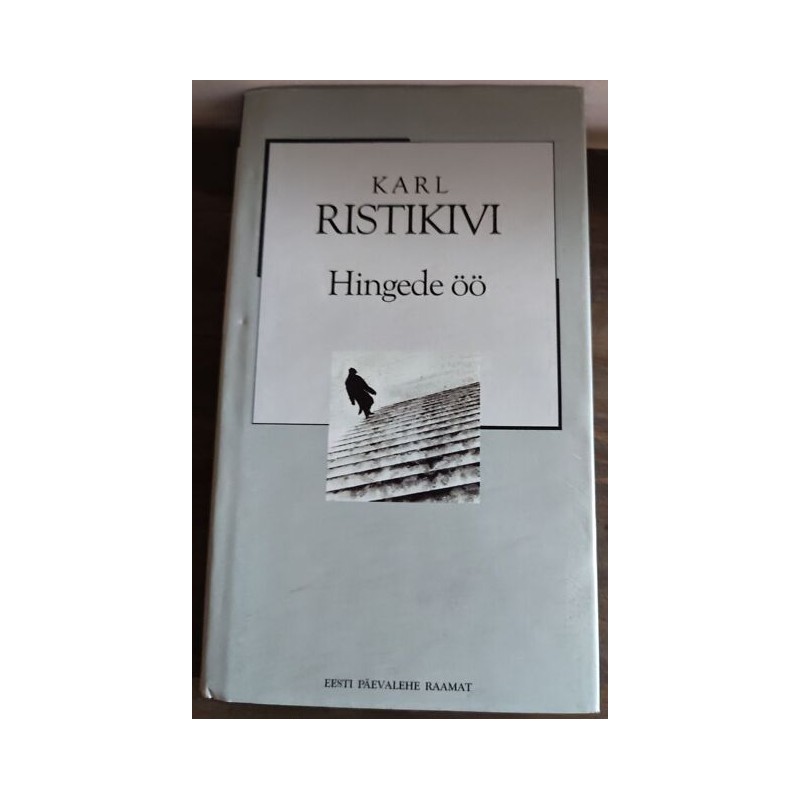

The novel, with its complex structure and multiple levels of meaning, is primarily an analysis of a deep state of crisis. The motif of constantly proving one's own existence and the right to life is repeated.
The work of Karl Ristikivi (1912–1977) is considered the pinnacle of Estonian novel writing. "Night of Souls" (1953) is a three-part work, gloomy in mood and devoid of humor. In the first part - "The House of a Dead Man" - the protagonist finds himself in a mysterious big city house on New Year's Eve, wandering through its countless rooms and winding passages. He meets the inhabitants of the house and talks with them about topics concerning the meaning of human life. In the third part - "Seven Witnesses" - the protagonist is in court, where he is accused of several sins. Between these two parts is "A Letter to Mrs. Agnes Rohumaa", in which the author explains his writing principles.
Born in Paadrema parish in Lääne County as the son of a farmhand, Karl Ristikivi received his secondary education in Tallinn, studied geography at the University of Tartu from 1936 and graduated cum laude in 1942. He then worked at the university's Institute of Economic Geography and in 1943 fled to Finland, where he was an administrator at the Estonian Bureau. From 1944 he lived in Sweden. Ristikivi began his literary career as a student in his homeland, where his first novels were published, but most of his literary work remained in exile.
"Night of Souls" was a very personal work for Ristikivi. He wrote it as a refugee whose path home was cut off by the occupation that struck Estonia. The protagonist of the novel is a homeless Estonian who wanders in a strange house, as in the rigid and strict social class boundaries of mid-20th-century Swedish society. The house where the protagonist ends up has also been seen as a metaphor for the deadlock in Europe after World War II and for man's wanderings in the labyrinth of life. As such, Ristikivi's novel has been compared to the works of Hermann Hesse, Franz Kafka, Lewis Carroll, and Samuel Beckett.
Required literature in certain grades

Data sheet