- Out-of-Stock


Publisher: Hea Lugu
City: Tallinn
Year: 2014
Original language: English
Translator: Heidi Saar
Pages: 352
Condition: Cover corners slightly worn, contents in good condition
Dimensions: 150 × 215 mm
Size: standard format, with hard covers
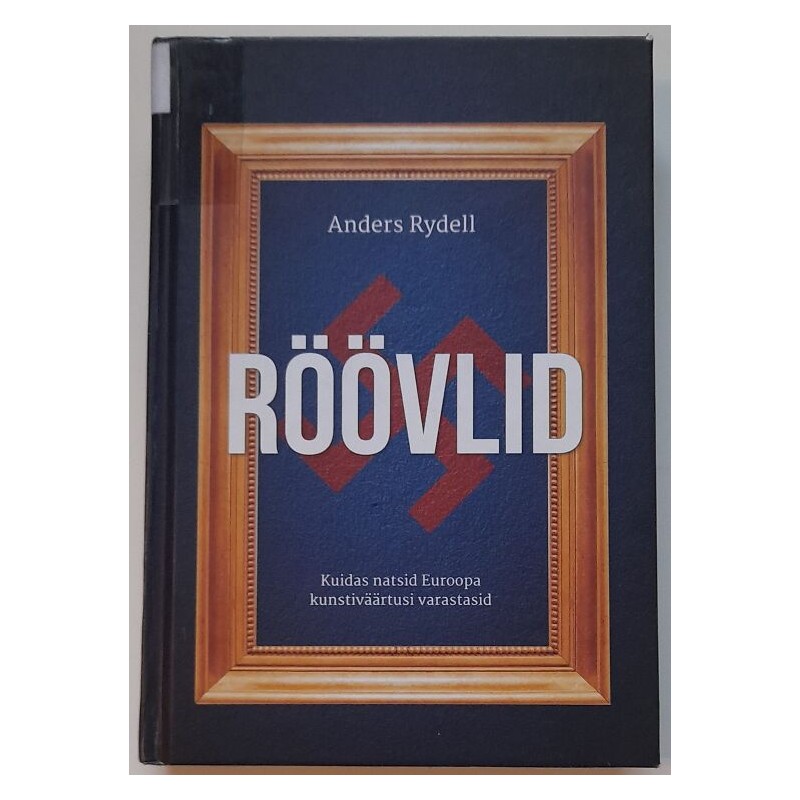
A few days after the surrender of Germany in World War II, an amazing treasure was found. In the depths of the Altaussee salt mine, hidden in the Austrian Alps, the Allied forces discovered the largest art collection of all time - thousands of masterpieces by Rembrandt, Rubens, Michelangelo, etc.
The find revealed the largest art heist in history: between 1933 and 1945, the Nazis stole millions of works of art. On Hitler's direct orders, specially trained groups moved through Europe, whose goal was art theft. After the war, many works were found both in Altaussee and elsewhere, but more than 100,000 works were long lost. They have only begun to emerge in the last decade, with several appearing in top museum displays in Paris, New York and Berlin.
In the book you hold in your hands, Anders Rydell explores the Nazi interest in culture and how art became an important part of Third Reich politics. In his search, he reaches back in time to the 19th century, when the aesthetic ideals of romanticism mixed with ideas about race and national socialism that arose in the wake of Darwin's discoveries.
Rydell also oversees the often dramatic restitution processes in Europe, Russia and the US, which have caused heated debates and diplomatic crises where the interests of the former owners, lawyers and others involved intersect.

Data sheet
Publisher: Hea Lugu
City: Tallinn
Year: 2014
Original language: English
Translator: Heidi Saar
Pages: 352
Condition: Cover corners slightly worn, contents in good condition
Dimensions: 150 × 215 mm
Size: standard format, with hard covers